Last Updated: October 26, 2026
Quick Summary
An older home repairs checklist prioritizes inspections and fixes by how soon each item will cause damage if ignored, starting with safety issues like gas, electrical and structural concerns, then water intrusion from roof, gutters, caulking and foundation. Because age changes the risk profile, older homes need triage rather than routine maintenance, so the order of your checklist matters more than its length.
- Roof and drainage problems cause more expensive damage than any other repair category.
- Water trapped in cracks expands when it freezes, widening gaps through a Scarborough winter.
- Seal the top of the house before the bottom because water runs downhill.
- Call a professional for gas, main electrical panels, structural movement, or work above a single-storey roofline.
- FIXRR’s Task Smasher completes up to five tasks in one visit with a 1-year workmanship warranty.
Table of Contents
- Why Older Homes Need a Different Repair Checklist
- Common Repairs in Older Homes: What Fails First
- Exterior Checklist: Roof, Gutters, Siding and Foundation
- Interior Checklist: Windows, Doors, Caulking and Basement
- Your Home Maintenance Checklist Before Winter Arrives
- Small Home Repairs Before Winter That Prevent Big Bills
- The Older House Inspection Checklist for Buyers and Sellers
- How to Prioritize Older Home Repairs and When to Call a Pro
- Frequently Asked Questions
Why Older Homes Need a Different Repair Checklist
A home built in 1975 does not fail the way a home built in 2005 fails. That single fact reshapes how you should approach repairs for older homes checklist planning. At FIXRR, we work on Scarborough houses from every decade between 1970 and 2005, and the pattern is consistent: older homes fail at the joints, the seals, and the systems that were never designed for today’s demands.
An older home repair checklist is a prioritized list of inspections and fixes organized by how soon each item will cause damage if ignored. It differs from a standard maintenance list because age changes the risk profile. Materials are closer to the end of their service life. Previous renovations may hide problems. And small failures spread faster.
Here is the core tension most guides miss. Newer homes need maintenance. Older homes need triage. You are not keeping a healthy house healthy. You are catching decay before it becomes structural.
That is why the order of your checklist matters more than the length of it.
Common Repairs in Older Homes: What Fails First
Water damage tops the list, followed by electrical and heating systems. In practice, most older-home repair budgets get eaten by moisture that started small and ran unnoticed for years.
Water, Roof and Drainage
Roof and drainage problems cause more expensive damage than any other category. A missed shingle becomes a leak. A clogged downspout becomes a wet foundation.
Watch for these early signals:
- Stained ceiling patches after heavy rain
- Granules collecting at the base of downspouts
- Water pooling within a metre of the foundation
- Soft spots on fascia boards
A common mistake is patching the visible stain instead of tracing the source. The stain is the symptom, not the problem.
Electrical, Plumbing and Heating
Systems in older homes carry the highest safety stakes. Aluminum wiring, aging breaker panels, and galvanized pipes all show up in houses from this era.
Check these items:
- Breakers that trip repeatedly under normal load
- Discolored outlets or warm cover plates
- Water pressure that drops when two taps run
- A furnace that short-cycles or smells of gas
If you smell gas, leave the house and call your gas utility immediately. Do not troubleshoot it yourself.
Exterior Checklist: Roof, Gutters, Siding and Foundation
Start at the roofline and work down. The exterior is where water gets in, so it deserves the first pass on any older home repairs list.
Walk the property and check:
- Missing, lifted, or cracked shingles
- Sagging gutters and loose hangers
- Downspouts that discharge too close to the wall
- Rot or gaps in siding and trim
- Cracks wider than a coin in the foundation
- Efflorescence, the white powder that signals moisture moving through masonry
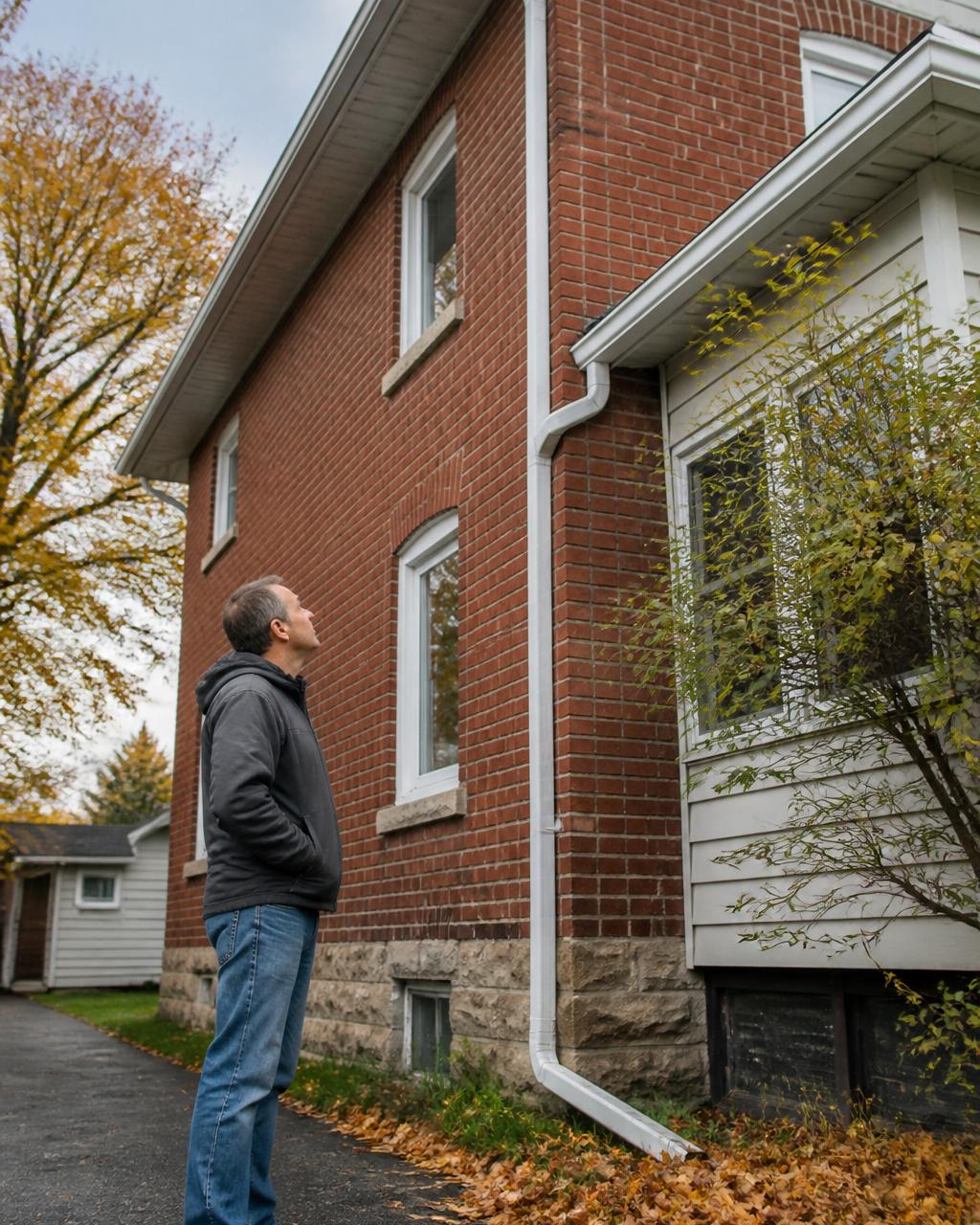
If the list comes back long, you do not have to climb a ladder yourself. You can review exterior maintenance options that cover roof, gutter, siding and foundation work. You can review exterior maintenance options that cover roof, gutter, siding and foundation work.
Interior Checklist: Windows, Doors, Caulking and Basement
Air leaks and moisture dominate the interior. Both are cheap to fix early and costly to ignore.
Work through these:
- Cracked or missing caulk around window frames
- Worn weatherstripping on exterior doors
- Fogged double-pane glass
- Doors that stick in humid weather, a sign of swelling or settling
- Damp smell or white staining in the basement
- Floor joists with soft spots or visible sag
The thing nobody tells you about caulking is that the prep matters more than the product. Caulk will not bond to a dirty or wet surface, and it will fail within a season. Clean, dry, and backer rod first, then seal.
For windows and doors specifically, you can book caulking and weatherstripping in Scarborough rather than chasing each gap yourself.
Your Home Maintenance Checklist Before Winter Arrives
Winter is the deadline that forces prioritization. A home maintenance checklist before winter should close every water entry point before the first hard freeze.
The reason is simple. Water trapped in a crack expands when it freezes. That expansion widens the crack. Repeat that cycle through a Scarborough winter and a hairline gap becomes a real repair.
Your pre-winter sequence:
- Clear gutters and confirm downspouts run away from the house.
- Seal gaps around pipes, vents, and sill plates.
- Test the furnace before you need it.
- Shut off and drain exterior hose bibs.
- Replace worn weatherstripping on doors.
- Check the attic for damp insulation or daylight.
If you want a fuller seasonal plan, essential home maintenance tips for every season walks through the year task by task.
Small Home Repairs Before Winter That Prevent Big Bills
Small home repairs before winter deliver the best return of anything on this list. A tube of caulk costs far less than a drywall and insulation repair.
These are the jobs worth doing now:
- Re-caulk around windows and door frames
- Replace a torn door sweep
- Tighten loose gutter hangers
- Add downspout extensions to move water further out
- Seal cracks in the driveway and walkway
- Insulate exposed pipes in the basement
None of these require special skill. All of them prevent water and heat loss.
A common mistake is doing them in the wrong order. Seal the top of the house before the bottom. Water runs downhill, so roof and gutter fixes come before basement sealing.
The Older House Inspection Checklist for Buyers and Sellers
An older house inspection checklist is the short list of items that decide whether a deal moves forward. Buyers use it to price risk. Sellers use it to remove objections before the inspector arrives.
Both sides should focus on:
- Roof age and remaining life
- Foundation cracks and evidence of movement
- Electrical panel type and wiring material
- Plumbing material and water pressure
- Furnace and water heater age
- Evidence of past water intrusion
- Window condition and seal failure
Sellers get the better outcome by fixing small items early. A loose handrail, a dripping tap, or a missing outlet cover reads as neglect to a buyer, even when the house is sound.
How to Prioritize Older Home Repairs and When to Call a Pro
Prioritize by damage potential, not by visibility. A hidden slow leak outranks a scuffed wall every time.
Use this order:
- Safety first: gas, electrical, and structural concerns.
- Water intrusion: roof, gutters, caulking, foundation.
- System reliability: heating, plumbing, and electrical capacity.
- Comfort and efficiency: insulation, windows, weatherstripping.
- Cosmetic: paint, trim, and finishes.
Call a professional when the job involves gas, the main electrical panel, structural movement, or anything above a single-storey roofline. If you are weighing the decision, this guide on DIY or hiring a handyman sets out how to make that call.
For homeowners with a backlog, batching work is the practical answer. FIXRR’s Task Smasher™ service completes up to five tasks in one visit, which suits older Scarborough homes where small issues cluster. Most bookings are confirmed within 24 hours, and every job carries a 1-year workmanship warranty. You can check current pricing before you book.
Prioritize by damage potential, not by visibility, using this order.
| Priority | Category | Examples |
|---|---|---|
| 1 | Safety first | Gas, electrical, and structural concerns |
| 2 | Water intrusion | Roof, gutters, caulking, foundation |
| 3 | System reliability | Heating, plumbing, and electrical capacity |
| 4 | Comfort and efficiency | Insulation, windows, weatherstripping |
| 5 | Cosmetic | Paint, trim, and finishes |
Frequently Asked Questions
What repairs should you check first in an older home?
Start with anything that lets water in or affects safety. Check the roof, flashing, eavestroughs, foundation grading and basement for moisture, then look at electrical panels, outlets and any plumbing that drips. Water damage and electrical faults cause the most expensive damage in older homes, so they come before cosmetic fixes. Once those are clear, work through windows, doors, caulking and heating. A short older home repairs checklist organized by area of the house keeps you from missing the items that matter most.
What should be on a home maintenance checklist before winter?
A home maintenance checklist before winter should cover gutters cleared of leaves, downspouts directing water away from the foundation, exterior caulking and weatherstripping checked, the furnace serviced and filter replaced, outdoor taps shut off and hoses drained, and the roof inspected for loose or missing shingles. Inside, test smoke and carbon monoxide alarms and seal gaps around windows and doors. Doing these in fall, before the first hard freeze, prevents the burst pipes and ice damage that show up in January.
Which older-house repairs can you do yourself, and when should you call a professional?
Caulking, weatherstripping, replacing a furnace filter, clearing eavestroughs from the ground and touching up paint are reasonable do-it-yourself tasks. Call a professional for anything involving electrical work, gas appliances, roof access, structural cracks or water that keeps coming back after you seal it. Older homes often hide surprises behind walls, and an insured professional carries the coverage if something goes wrong. If a job needs a ladder above one storey or a permit, book it out.
How do you prioritize repairs when maintaining an older home?
Sort every item into three groups: safety and water first, then things that will get worse if ignored, then cosmetic work. A leaking roof or a failing electrical panel outranks a sticking door every time. Grouping small tasks into one visit saves time and money, which is why FIXRR’s Task Smasher service handles up to five tasks in a single trip. Ask for a written list of what was done and what still needs attention so you can plan the next round.
Older homes reward attention, and they punish delay. The gap between a small fix and a major repair is usually one season. If your list has grown past a weekend’s work, FIXRR can clear it in a single visit with same-week booking, a 1-year workmanship warranty, and a 100% satisfaction guarantee. Get started with FIXRR and turn that backlog into a finished checklist.
